
LPUs vs. GPUs in Language Processing: Key Differences
Jaidev Yadav
Share
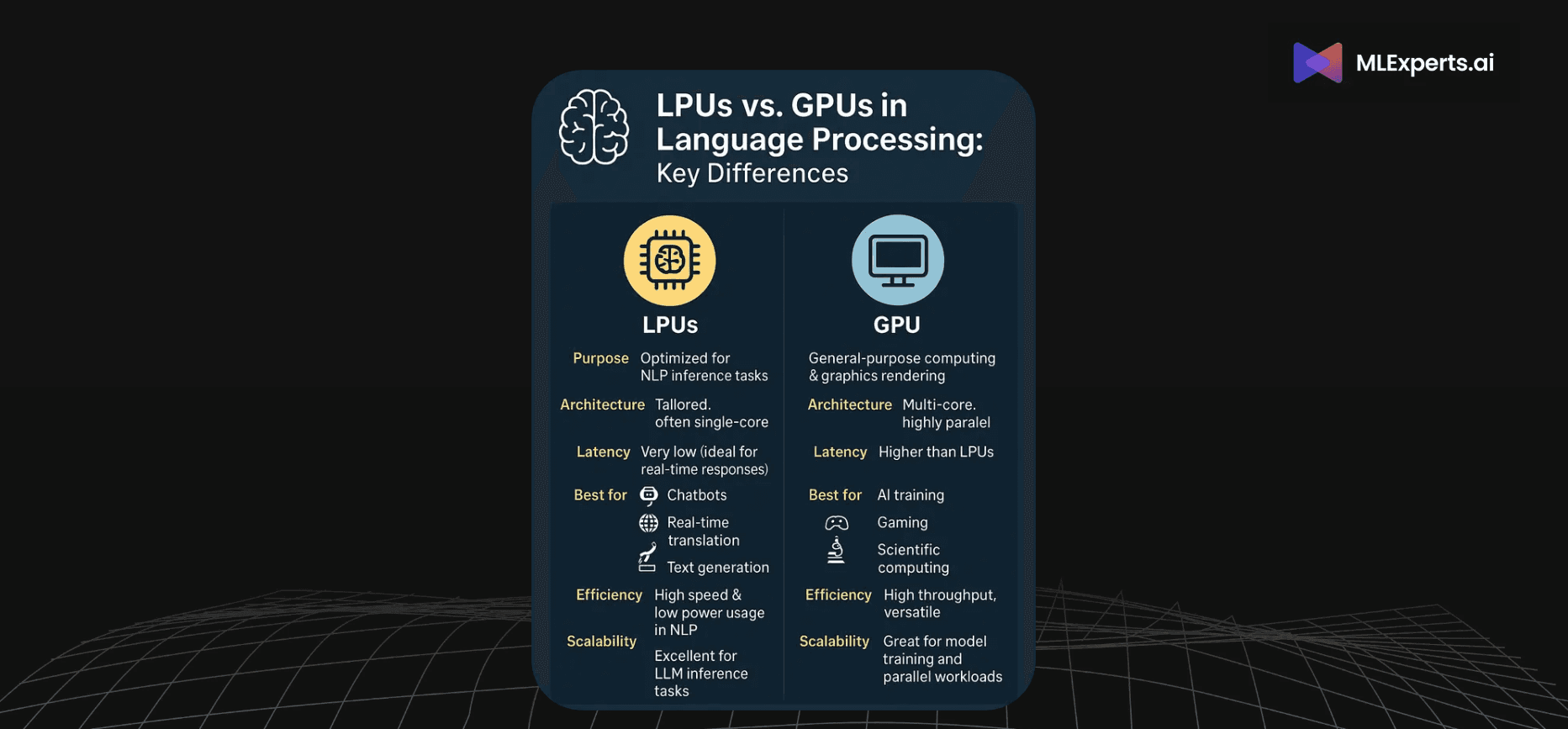
LPUs (Language Processing Units) and GPUs (Graphics Processing Units) are processors that play distinct roles in natural language processing (NLP). Understanding their differences is important for optimizing NLP applications. This article explores the advantages of LPUs, their applications, and guidance on when to use them over GPUs. For additional information on the significance of these processors, check out our overview on our firm's commitment to excellence.
Understanding LPUs and Their Advantages
LPUs are designed to enhance and optimize inference for NLP algorithms, particularly large language models (LLMs). LLMs are advanced AI systems trained on vast amounts of text data, enabling them to understand and generate human language. LPUs perform well in processing these models, allowing for performance improvements in tasks that require nuanced language understanding. LPUs outperform general-purpose processors, especially during inference stages where speed and efficiency are key. They are tailored for tasks such as understanding and generating human language, making them ideal for applications that demand rapid responses, like chatbots and real-time translation services. Their low-latency capabilities ensure quick data processing and delivery, enhancing user engagement.
Speed and Efficiency of LPUs
LPUs provide performance improvements and efficiency gains for NLP tasks, particularly during inference. Their design focuses on optimizing language data processing, allowing them to deliver faster response times compared to GPUs. For instance, LPUs can process data quicker, making them suitable for applications that require immediate interactions, such as virtual assistants and customer service bots. For a deeper understanding of how LPUs function, you can explore the article on what LPUs are and why they are faster than GPUs.
Low Latency Inference with LPUs
The low-latency capabilities of LPUs facilitate rapid data processing and delivery. This feature is particularly beneficial in interactive applications, where delays can hinder user engagement. LPUs are designed to ensure that applications like chatbots and real-time translation services can respond instantly, maintaining a seamless user experience. For further insights into natural language processing, refer to the comprehensive guide on natural language processing.
Applications of LPUs in NLP
LPUs are particularly effective for high-speed inference tasks, including:
- Chatbots: LPUs enhance the responsiveness and accuracy of conversational agents.
- Language Translation: They enable quick and accurate translations, crucial for real-time communication.
- Text Generation: LPUs can efficiently generate coherent and contextually relevant text.
Their focus on language processing makes them ideal for applications that require understanding and generating human language quickly and accurately. The ability to scale LPUs efficiently allows them to manage extensive NLP tasks, such as social media analysis and large document processing.
When to Use LPUs vs. GPUs
The choice between LPUs and GPUs depends on the specific requirements of the application being developed. LPUs are ideal for high-speed inference tasks, while GPUs are versatile and can handle a wide range of applications, including graphics rendering and AI training. LPUs typically feature a single-core architecture, which is advantageous for NLP tasks that require maintaining context and order. In contrast, GPUs have a more complicated architecture with multiple cores, making them suitable for general-purpose computing. Understanding these differences can help developers make informed decisions about which processor to utilize for optimal performance.
Optimal Use Cases for LPUs
LPUs perform well in tasks that involve high-speed inference for NLP, such as:
- Chatbots
- Language translation
- Text generation
Their ability to process language data efficiently makes them the preferred choice for applications that require rapid response times.
Optimal Use Cases for GPUs
GPUs are better suited for a broader range of applications, including:
- Gaming
- Scientific computing
- AI training
Their versatility allows them to handle various workloads effectively, making them a valuable asset in general-purpose computing environments.
Choosing the Right Processor for NLP Tasks
When selecting between LPUs and GPUs, consider the following factors:
- Application Type: Determine if the task requires high-speed inference or general-purpose computing.
- Processing Speed: Assess the need for rapid response times in interactive applications.
- Scalability Needs: Evaluate the volume of data to be processed and the required processing power.
Understanding the strengths of each processor can lead to better performance in language processing applications. For further assistance in making these choices, we're here to help.