
Building Scalable Multi-Region Data Pipelines
Saurav Shrestha
Share
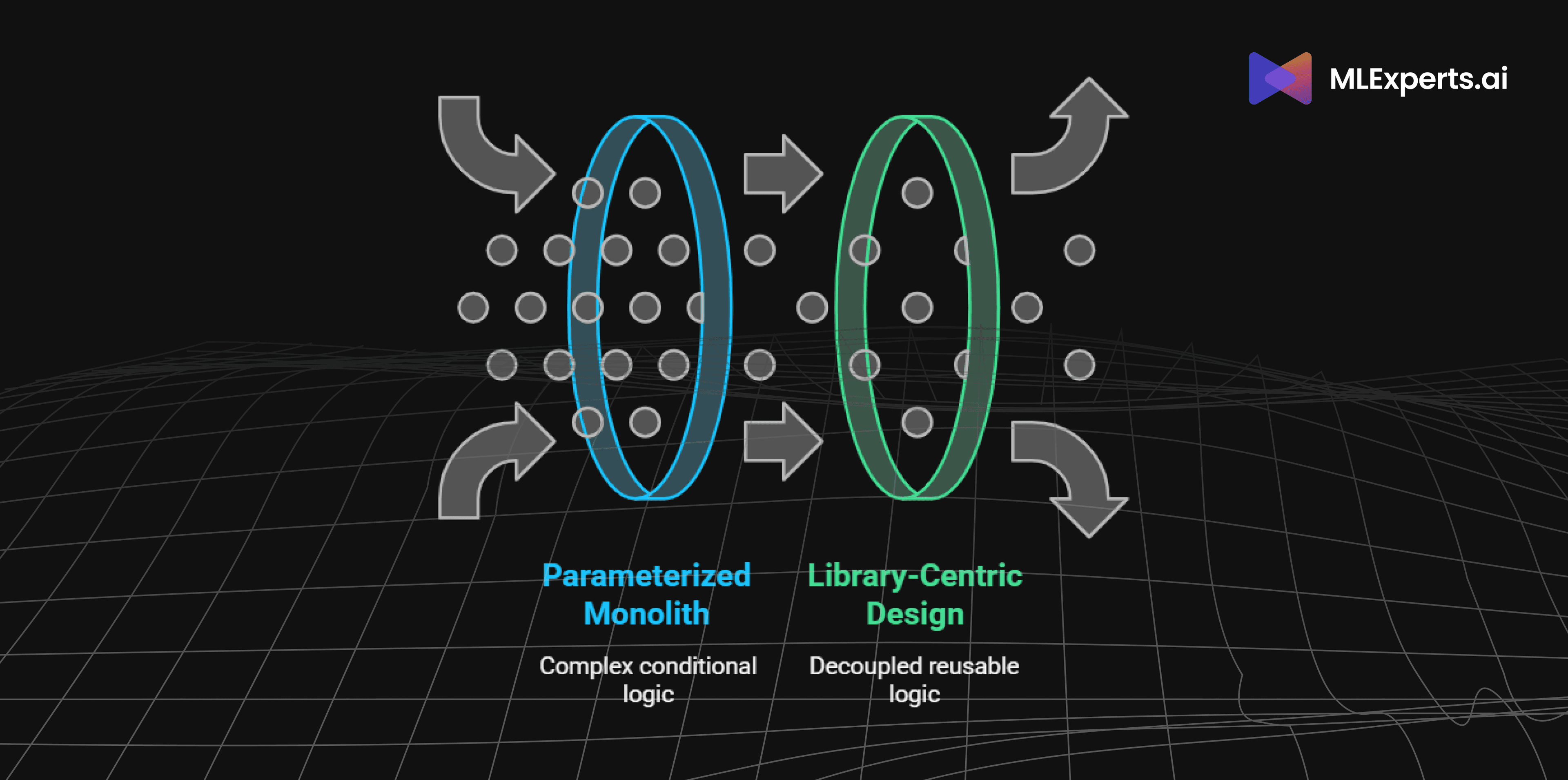
The library-centric AWS Glue approach eliminates code duplication by separating shared logic into reusable packages while keeping client-specific transformations configurable. This improves scalability, reduces maintenance, and accelerates onboarding. Future enhancements include AI-driven schema mapping and automated data quality checks making AWS Glue a robust data platform.
A Library-Centric AWS Glue Strategy
1. Introduction
Problem Statement
Modern enterprises often operate across multiple regions, managing distinct business units or clients with unique:
-
Data Schemas: Eliminates the need for database server provisioning, reducing costs significantly.
-
File Formats: Some clients prefer CSV, while others use Parquet or have custom-naming conventions.
-
Regional Compliance Rules: GDPR (Europe), CCPA (California), and other compliance requirements dictate data handling procedures.
-
Business Logic Variations: Distinct data transformations, metrics calculations, or aggregation rules for each client.
Initial Approach: Maintaining Separate AWS Glue Jobs
Initially, organizations managed AWS Glue jobs separately for each client or region. For example:
-
Job A processed Client X’s data in us-east-1.
-
Job B handled Client Y’s data in eu-west-1.
-
Job C dealt with Client Z’s dataset in ap-southeast-1.
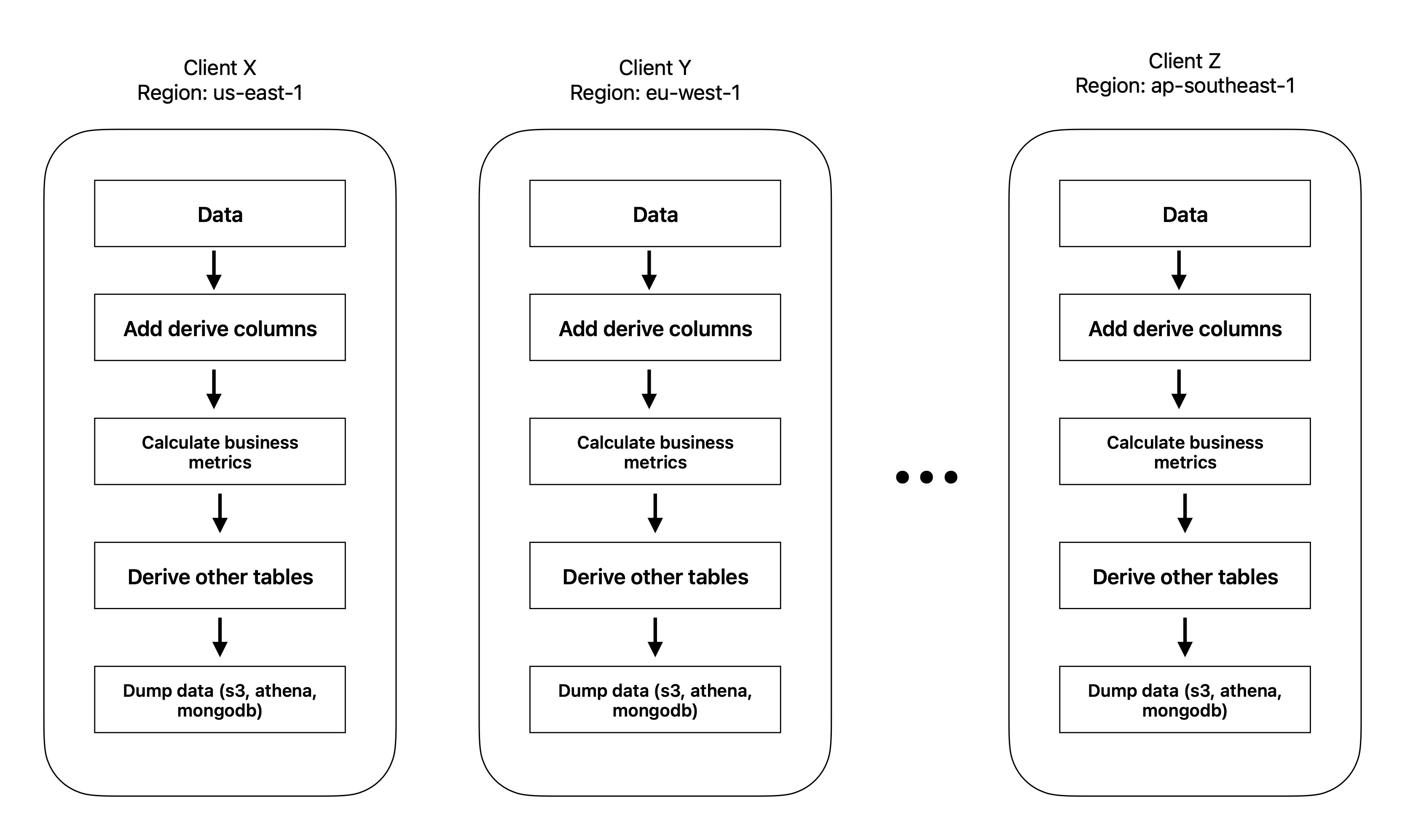
While this approach provided client isolation, it introduced critical challenges:
Challenge | Description |
Code Duplication | 80% of the logic (e.g., data cleansing, validations, metric calculation) was identical across jobs. |
Inconsistent Bug Fixes | Fixes applied to one job were often missed in others, leading to inconsistent data quality. |
Operational Overhead | Onboarding new clients required creating and maintaining new Glue jobs, adding complexity and effort. |
As a result, the pipeline was difficult to scale, costly to maintain, and prone to errors.
2. Evolution Towards a Scalable Solution
The solution evolved through three architectural phases:
Phase 1: Separate AWS Glue Jobs (Initial State)
Each client had a dedicated AWS Glue job, leading to redundancy.
Phase 2: Parameterized Monolith
A single Glue job with client-specific parameters was introduced to reduce duplication, but the logic became increasingly complex, with a web of if-else conditions handling different client requirements.
Phase 3: Library-Centric Approach (Final State)
By decoupling shared logic into a reusable package and maintaining client-specific logic separately, AWS Glue transformed from a fragile script-runner into a scalable data product.
3. Package-Based Approach
3.1 What It Is
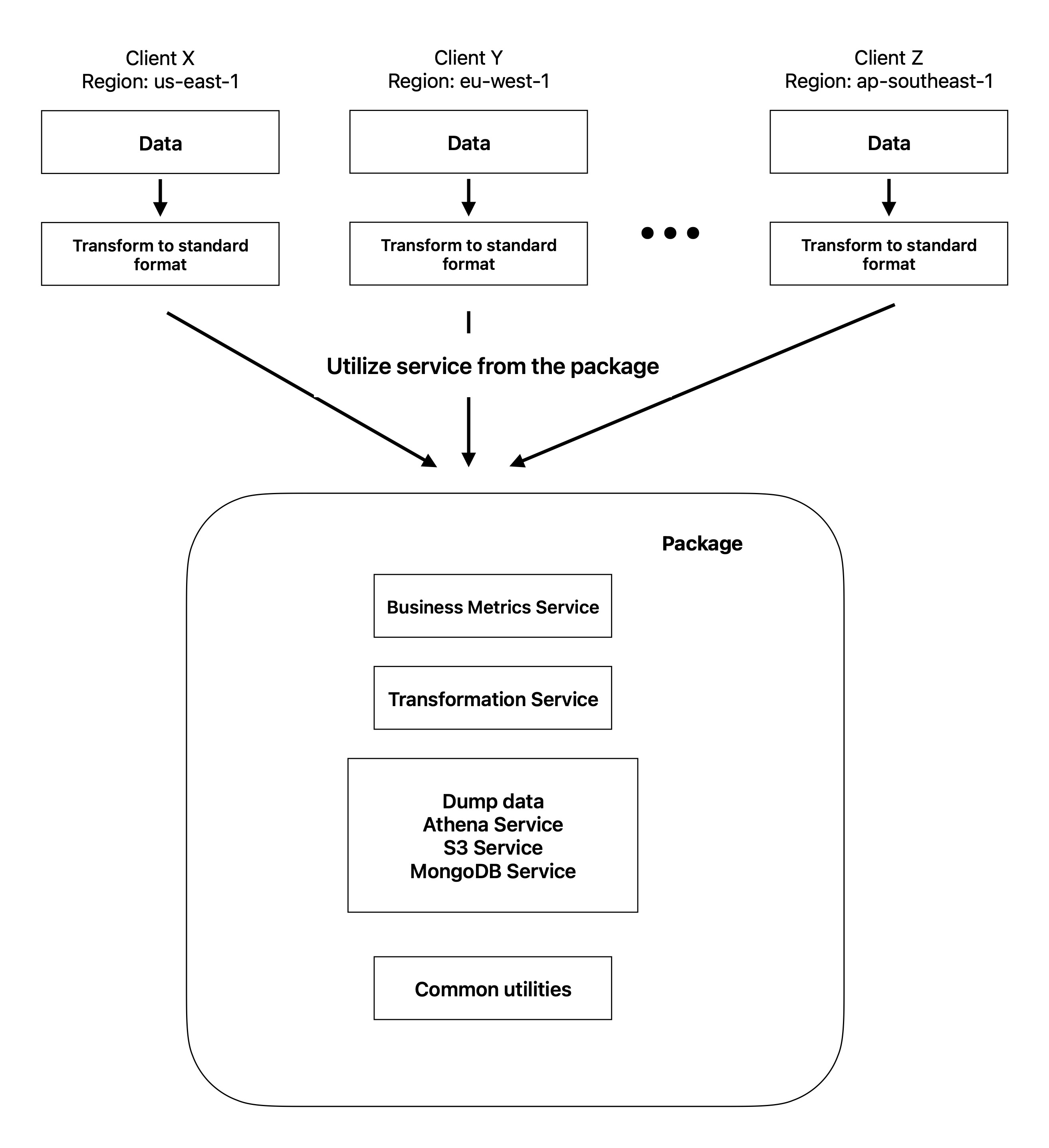
A modular design pattern where:
-
Client-Specific Logic is Isolated: Each client/region has a dedicated lightweight Glue job that applies transformations to standardize the data (e.g., renaming columns, enforcing schema consistency).
-
Core Logic is Standardized: Shared transformations, validations, and interactions with AWS services (S3, Athena, Glue Catalog, Metric Calculations) reside in a reusable service package.
This results in a clean separation of concerns, making maintenance and scaling significantly easier.
3.2 Benefits Over Maintaining Separate Jobs
Traditional Separate Jobs | Package-Based Approach |
Hardcoded S3 paths | Auto-generated S3 paths via client configurations. |
Code duplication across multiple jobs | Shared logic as a reusable package. |
Inconsistent bug fixes | Centralized fixes, automatically applied to all clients. |
High operational overhead | Faster onboarding with minimal setup. |
Proven Outcomes
-
Bug resolution time reduced significantly due to centralized fixes.
-
Faster client onboarding with minimal configuration changes.
-
Lower maintenance cost as most updates are applied at the package level.
3.3 Implementation Workflow
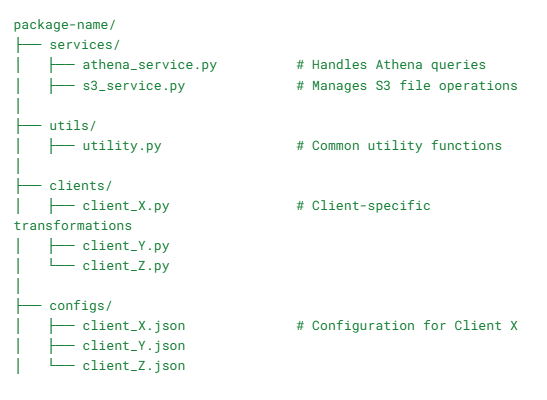
Step 1: Directory Structure
A modular package structure ensures separation of services and utilities.
Step 2: Implementing Standardized Service Layer
Instead of hardcoding transformations, services handle core logic such as:
-
S3 Service: Abstracts bucket interactions (s3_service.py).
-
Athena Service: Handles query execution (athena_service.py).
Step 3: Using Config-Driven Execution
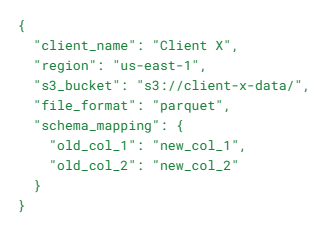
Each client’s job loads its respective JSON config, ensuring that onboarding a new client only requires adding a new config file rather than modifying the code.
3.4 Future Enhancements
1. AI-Driven Schema Mapping
-
Train a machine learning model using historical Glue Catalog metadata to auto-detect and map column names when onboarding new clients.
Reduce manual intervention in defining schema mappings.
2. Automated Data Quality Checks
-
Alert on missing or unexpected columns before data ingestion.
3. Cost Optimization via Serverless Computing
-
Leverage AWS Lambda for lightweight ETL operations, reducing Glue job execution costs.
-
Use Amazon EventBridge to trigger workflows dynamically based on data arrival.
4. Conclusion
The evolution from separate Glue jobs → parameterized monolith → library-centric design highlights a key architectural lesson:
Isolation beats conditionals.
By decoupling client/region specifics into versioned libraries, we transformed AWS Glue from a fragile script-runner into a scalable, multi-tenant data processing platform.