
Boosting Restaurant Efficiency & Customer Experience with AI-Driven Solutions
Palistha Deshar
Share
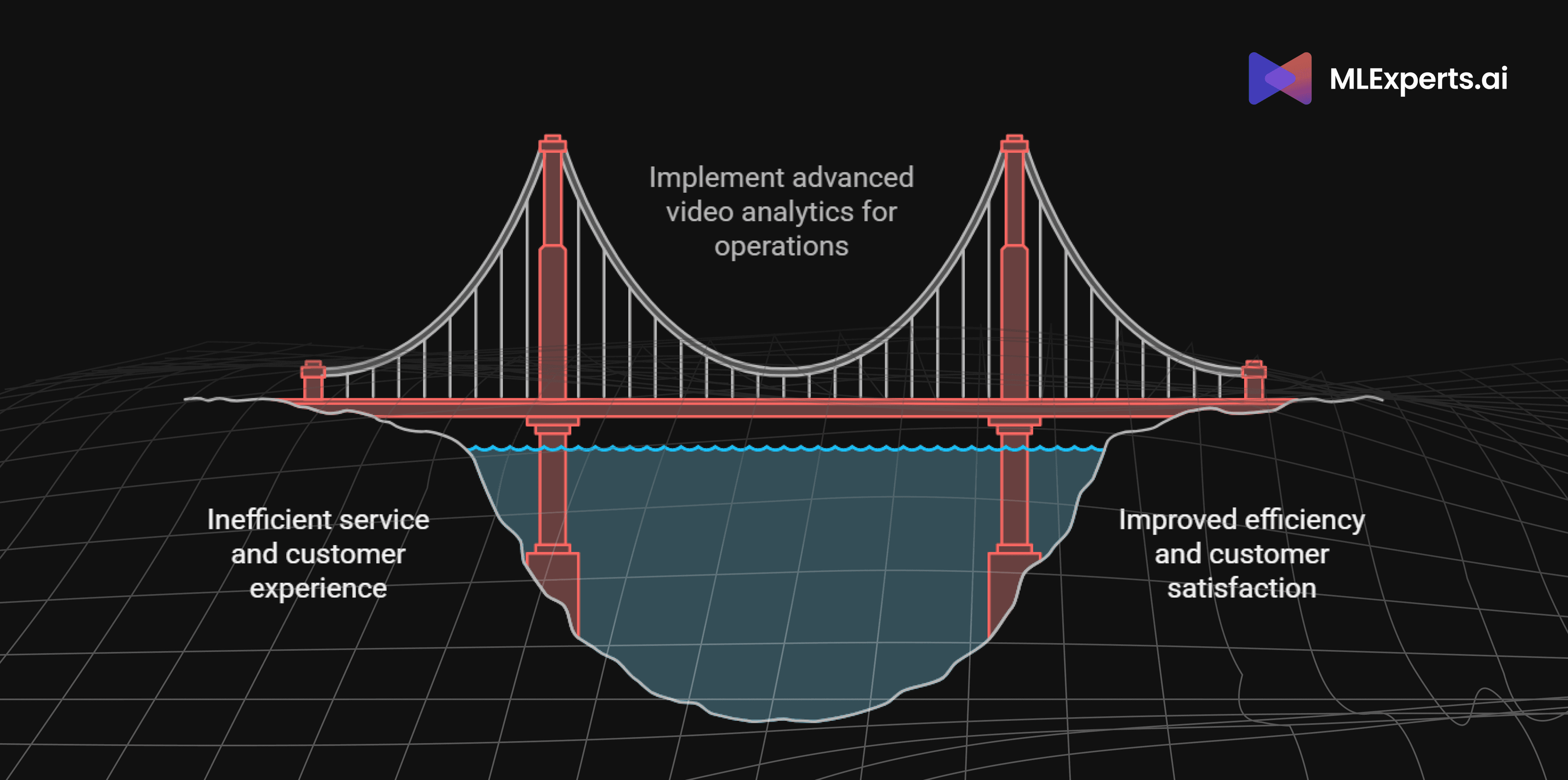
In the restaurant management industry, optimizing efficiency and customer experience is crucial. We implemented advanced video analytics to enhance operations, focusing on counting tables, tracking occupancy, and monitoring waiter service. Key challenges included fine-tuning models for accuracy and designing an effective state machine for real-time tracking. Through iterative improvements and strategic model selection, we successfully deployed AI-driven solutions, providing valuable insights into table turnover rates and service times, ultimately boosting operational efficiency and customer satisfaction.
Introduction
In the bustling world of restaurant management, efficiency and customer experience are key to success. We focused on analyzing video content with advanced technologies to greatly enhance how we streamline operations in different areas of the restaurant. This blog explores our initiative to leverage analytics and real-time insights from video footage to help us optimize service delivery with precision.
What We Tried to Solve:Counting the number of tables in video footage.
Identifying timestamps for when a specific table is occupied and unoccupied.
Tracking when a waiter serves a table.
-
Model Selection and Fine-Tuning:
Challenge: Identifying and fine-tuning the right image classification model to distinguish between waiters and customers was a critical task. The initial models struggled with accuracy, necessitating extensive experimentation.
Learning: We explored multiple models, ultimately fine-tuning the ResNet50 model using labeled images from video footage. Iterative adjustments to hyperparameters and continuous refinement with more datasets were essential steps.
-
Inconsistent Table Detection:
Challenge: Achieving accurate table coordinates proved challenging due to inconsistent object detection by lower-level object detection models.
Learning: Transitioning to a higher-level model like YOLOv8 significantly improved detection reliability. This experience highlighted the need for scalable infrastructure to support advanced models in real-time operations. Balancing computational efficiency with detection accuracy was a key takeaway, emphasizing the importance of robust infrastructure.
-
State Machine Implementation:
Challenge: Designing a state machine to accurately track table occupancy and waiter interactions was complex. The main difficulty was defining rules to accurately record states and transitions, ensuring real-time precision.
Learning: Implementing a state machine required planning and extensive testing. We established regions of interest (ROI) around detected tables and recorded states per second. This approach allowed us to monitor occupancy and waiter presence, ultimately providing precise timestamps for various activities.
Conclusion:
By analyzing video content, we can gain significant insights into restaurant operations, such as table turnover rates and service times. By breaking down problems into manageable steps and learning from challenges, we can successfully deploy AI-driven solutions that enhance operational efficiency and improve the overall experience for our customers.