
Looking into the Most Recent Advances in AI Technology for 2024
Charu Manandhar
Share
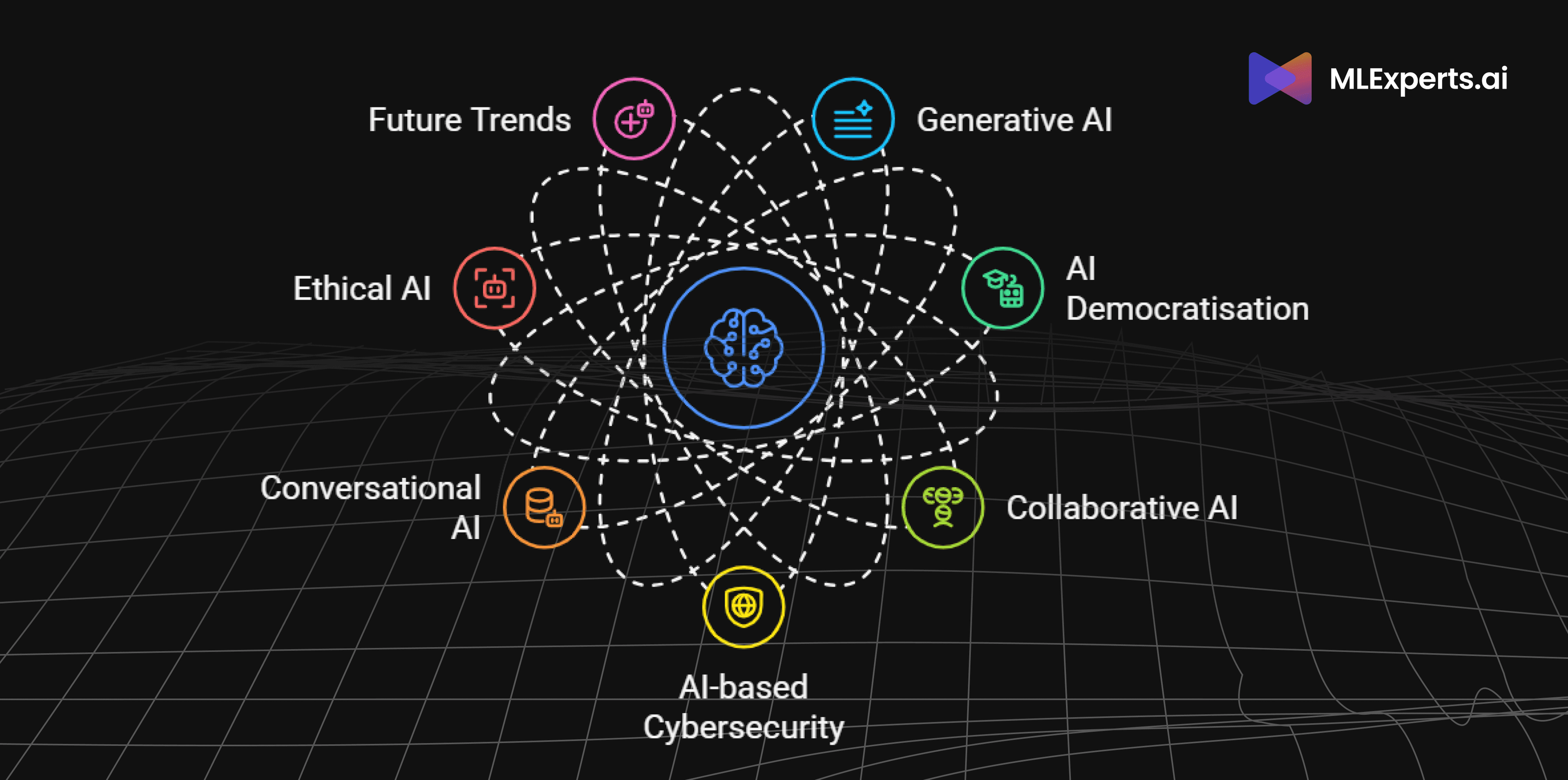
AI, or artificial intelligence, allows computers to think critically and learn independently, replicating human intelligence. This development has influenced industries via automation, advanced data analytics, and improved decision-making. In this article, we explore the potential of collaborative AI in enhancing human capabilities and cutting-edge developments, from generative AI to collaborative systems, while addressing ethical considerations and future trends.
AI, or artificial intelligence, allows computers to think critically and learn independently, replicating human intelligence. This development has influenced industries via automation, advanced data analytics, and improved decision-making. Despite fears about job losses, AI has transformed the employment market by opening up new options and allowing current employees to work more strategically.
However, there are advantages and disadvantages to artificial intelligence. On the plus side, technology increases productivity by automating jobs, allows for intelligent decision-making through data analysis, helps in medical diagnostics, and supports the development of self-driving cars. On the negative side, technology may result in employment losses, raise ethical questions about fairness and privacy, pose security dangers via hacking, and lack the human touch of creativity and empathy.
The Latest AI Technology Trends You Should Follow
Generative AI: Machine learning, or generative AI, is changing the way that computers produce text and image content. One remarkable example of outstanding text generation is OpenAI's GPT-3.
Google is transforming search using generative AI. It goes above and beyond simple keyword matching to increase accuracy and customization. Thanks to this technology, which is driven by massive language models like GPT-3, Google search is now more intelligent and user-friendly by providing personalised results. It provides users with results that exactly match their search criteria.
The Democratisation of AI: The goal of AI democratisation is to make technology more accessible to a greater number of people. Technologies such as AutoML and no-code AI platforms allow individuals and organisations without considerable programming experience to use AI efficiently. Apple's Create ML is an excellent example, enabling machine learning model construction using a low-code approach. Developers can easily prototype and deploy ML models for their apps using a visual interface and pre-built tools, reducing the need for specialised programming skills.
Embracing Collaborative AI: Collaborative AI is about humans and AI systems working together to get better results. Examples of collaborating computers in manufacturing and healthcare show how AI may increase human capabilities and efficiency.
Take Asana, a project management application, for example. It utilises collaborative AI to facilitate team collaboration and task management. You may create projects, assign tasks, establish deadlines, and monitor progress. Asana uses AI automation to help with repetitive chores and provide reminders, making collaborating simpler.
AI-based Cybersecurity: In cybersecurity, AI helps in identifying and managing online risks for organisations. Security teams are immediately notified when they uncover suspicious behaviour through data analysis. AI is used in cybersecurity to effectively automate tasks like identification and access management. Ensuring effective user permission management lowers the possibility of data breaches and unauthorised access.
DarkTrace is an excellent instance of a cybersecurity system that uses AI to identify and eliminate threats. By analysing network traffic, DarkTrace provides proactive threat intelligence and automated reactions. This helps businesses protect themselves from cyberattacks.
Using the Potential of Conversational AI: Conversational AI allows machines to communicate like humans, leading to more personalised and natural interactions. It's useful in customer service, healthcare, and other areas.
For example, on a website, a generative AI-powered virtual assistant can provide a natural language interface. Users can engage in seamless conversations about queries, support, and information retrieval. The AI understands and replies appropriately, improving the user experience and engagement on the website.The AI understands questions and provides accurate solutions, making answers more convenient and accessible.
Prioritising Ethical and Transparent AI: The present AI action focuses an extreme value on expanding technology's accessibility, which makes ethical and open AI practises crucial. This addresses biases and problems while ensuring fairness, user privacy, and ethical AI use.
AI-powered intelligent automation improves productivity and simplifies procedures for a variety of sectors. ThoughtSpot provides solutions for intelligent automation. They increase efficiency and streamline procedures by utilising AI. Their technology combines AI-driven analytics with search to improve accessibility and efficiency of data analysis. For enterprises, this intelligent automation streamlines decision-making procedures.
The Future of AI Trends: AI is set for significant growth, influencing a wide range of industries. Emerging trends include explainable AI, AI-driven automation, and the rise of edge computing. AI's integration with the Internet of Things (IoT) is gaining importance, affecting industries such as healthcare, transportation, banking, and customer service and many more.
However, the expanding usage of artificial intelligence presents challenges to society. Ethical considerations, privacy concerns, and potential employment consequences must be addressed. Ensuring fairness, transparency, and accountability in algorithms is critical, as is taking proactive measures to reskill in the AI-driven economy.
Despite the problems, the future offers opportunity for both individuals and businesses. AI technologies ease processes, improve decision-making, and encourage innovation. Businesses that adopt AI gain a competitive advantage by using data-driven insights to improve consumer experiences and increase efficiency. Individuals can pursue careers in AI, such as AI engineers, data scientists, and ethicists, and contribute to responsible AI development and deployment.
Conclusion
AI capabilities that were impossible just years ago now seem within practical reach. Trends such as generative AI, democratisation, and collaborative AI are influencing industries. AI is critical to cybersecurity and improves user experiences through conversational interfaces. It is critical to follow ethical AI practices. Explainable AI and IoT integration are among the next big trends. Implementing artificial intelligence provides companies with a competitive advantage, while individuals can pursue a variety of occupations. Companies may successfully navigate this changing environment by upholding ethical standards and promoting the synergy between human and AI skills for the benefit of all.